Why Are Scots Called Jacobites?
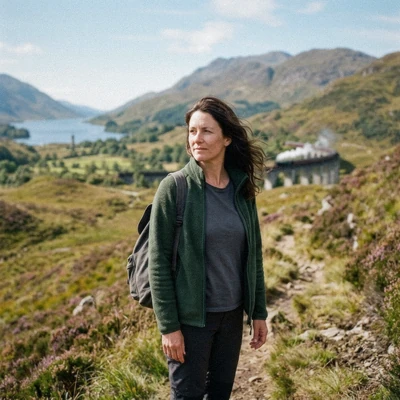
Scots are called Jacobites because the name comes from Jacobus, the Latin for James, the exiled Stuart king they backed after 1688. This page answers why are Scots called Jacobites in plain terms, then covers who they fought for, who they were, how the risings ended and where the story began, at Glenfinnan in August 1745.
Quick answer
Scots are called Jacobites because the name comes from Jacobus, the Latin for James, the exiled Stuart king they backed after 1688. The cause began with James VII and II and ended on the field at Culloden in April 1746. Not every Jacobite was a Scot, and not every Scot was a Jacobite.
Key takeaways
- The name Jacobite comes from Jacobus, Latin for James, and first meant supporters of James VII and II after he was deposed in 1688
- In 1715 about 20,000 Scots fought for the Jacobites against 11,000 who joined the government army
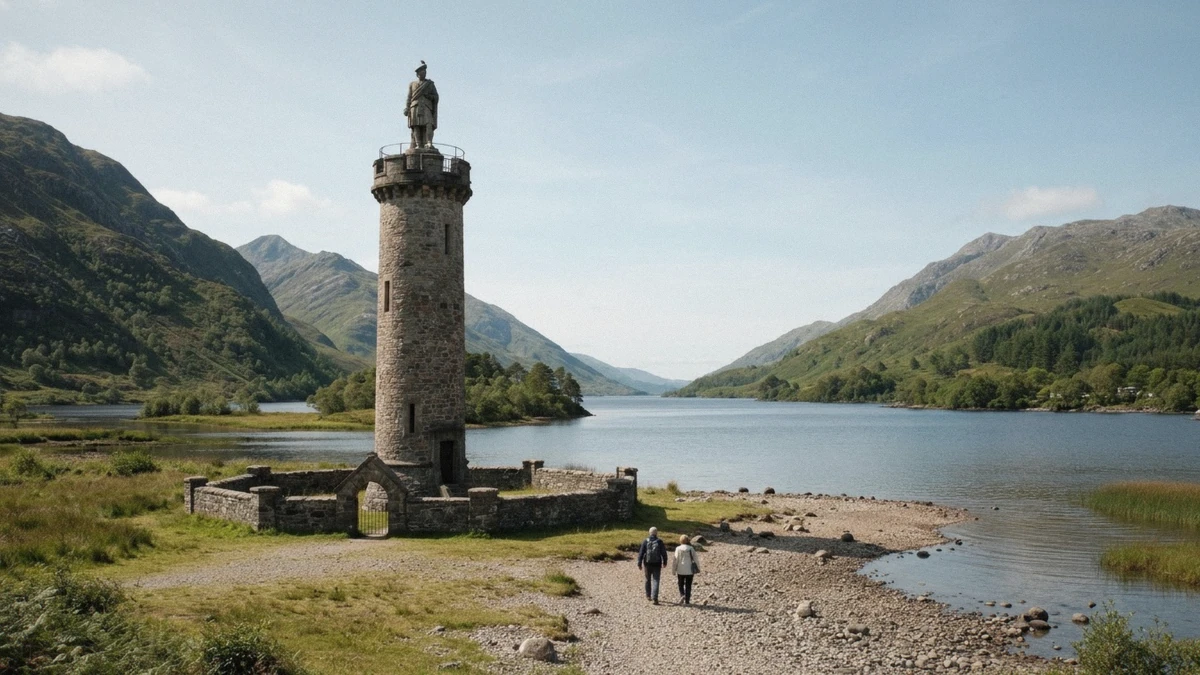
- The royal standard was raised near Glenfinnan on 19 August 1745, and the Glenfinnan Monument has marked the spot since 1814
- The steam train took the name in 1995, and you can see the Jacobite crossing the viaduct on the same glen floor where the rising began
- Want the history with the viaduct in one day? A guided Jacobite steam train trip from Inverness rides the line the name comes from
Jacobite Country Day Trips That Include the Train
If the history is what brought you to Glenfinnan, these guided days put the steam train, the viaduct and the Highlands in one booking, so the Jacobite story has a place to stand.
 from $261
Includes Steam Train Ride
From Inverness: Jacobite Steam Train & Highlands Tour
Experience the Jacobite Steam Train as it crosses the Glenfinnan Viaduct, on a day trip from Inverness that also takes in Loch Ness and a stop for lunch…
- Ride the Jacobite Steam Train over the viaduct
- Travel past famous Loch Ness
- Lunch stop in a Highland fishing town
- Glenfinnan Viaduct and Road to the Isles
 from $78
Optional Steam Train
From Edinburgh: Magical Highlands Tour with Jacobite Train
Explore the magical Highlands from Edinburgh, visit Harry Potter filming locations and see the Jacobite Steam Train cross the Glenfinnan Viaduct. Add the steam-train ride option if you…
- Watch the Jacobite Steam Train cross the viaduct
- Optional ride onboard the steam train
- Harry Potter filming locations across the Highlands
- Glenfinnan Viaduct and Loch Shiel views
 from $261
Includes Steam Train Ride
From Edinburgh: Hogwarts Express, Glenfinnan & Highland Tour
Follow in the footsteps of the world's most famous wizard and ride the real Hogwarts Express, the Jacobite Steam Train, across the Glenfinnan Viaduct. A full day in…
- Ride the Jacobite Steam Train (the Hogwarts Express)
- Cross the Glenfinnan Viaduct by steam train
- Scenic route to the harbour town of Mallaig
- Highland scenery, lochs and mountains
Why Are Scots Called Jacobites?
Scots are called Jacobites because the word comes from Jacobus, the Latin form of James. It named the supporters of King James VII and II after he was driven from his thrones, and later of his son James Francis Edward Stuart and his grandson Charles Edward Stuart, better known as Bonnie Prince Charlie. The label was never about being Scottish.
It was about which king you thought was the real one.
The trouble started in 1688. James was a Catholic king ruling mostly Protestant kingdoms, and many of his subjects feared a Catholic dynasty after the birth of a son that year. William of Orange, the husband of James's Protestant daughter Mary, landed in England and James fled.
In 1689 the Scots declared that he had forfeited the Scottish crown too, and William and Mary became the monarchs. The men who still called James the lawful king were the Jacobites.
The Stuarts were no outsiders in Scotland. They had ruled there since 1371 and inherited the English and Irish crowns in 1603. That is why the cause found such loyal ground in parts of Scotland, and why the story is told so strongly around Glenfinnan.
The table below shows who the Jacobites actually backed.
| Claimant | Relationship | Jacobite title |
|---|---|---|
| James VII and II | Deposed king, left for France in 1688 | The king over the water |
| James Francis Edward Stuart | Son of James, recognised by Louis XIV and the Pope in 1701 | James VIII and III |
| Charles Edward Stuart | Grandson of James, led the 1745 rising | Bonnie Prince Charlie |
Source: National Museums Scotland, History Extra.
Who Were the Jacobites Fighting For and Against?
The Jacobites fought for the restoration of the House of Stuart and against the government that replaced it: first William and Mary, then Queen Anne, then the Hanoverian kings. Anne, the last Stuart monarch, died in 1714 and the crown passed to her closest Protestant relative, George I of Hanover. The Act of Settlement of 1701 had already barred Catholics from the throne.
Behind the loyalty sat an idea. Many Jacobites believed in the divine right of kings, that a monarch is chosen by God and cannot be removed by Parliament, so the post-1688 government was not legitimate. The Acts of Union of 1707 added a second grievance for some Scots.
The Scottish and English Parliaments were merged, and opposition to the Union fed support for a Stuart return, although plenty of Presbyterians who hated the Union had no wish to see the Stuarts back.
Were the Jacobites Scottish or English?
Most of the armed Jacobites were Scottish, but the movement was never only Scottish. Jacobitism was also strong in Ireland, Wales and northern England, and there were English Jacobites such as Sir John Hynde Cotton, remembered as one of the most zealous. Scotland supplied the armies, and the figures show how many.
| Rising | Scots fighting for the Jacobites | Scots with the government army |
|---|---|---|
| 1715 | About 20,000 | About 11,000 |
| 1745 | The majority of 9,000 to 14,000 | Not stated |
Even so, Scotland was split. In 1715 the Jacobites outnumbered the government's Scots by almost two to one, but a large part of the country, Glasgow among it, stayed hostile to the Stuarts. The Jacobite cause was a Scottish civil war as much as a Scottish revolt against England.
Source: Wikipedia, Jacobitism, Scottish Tourist Guides Association.
Were the Jacobites Catholic or Protestant?
Mostly Protestant in Scotland. By 1745 fewer than 1% of Scots were Catholic, and they lived in the far north-west and a few noble families. The rank and file, and many of the leaders, belonged to Scottish Episcopalian congregations that refused to swear loyalty to the new kings.
Many Jacobites were Lowlanders, not the Catholic, Gaelic-speaking Highlanders of legend.
Religion still mattered, since James was Catholic and that was the root of the quarrel. Ireland's Jacobitism was largely Catholic. In Scotland the Episcopalian belief in the divine right of kings did more of the work, which is why around a quarter of the 1745 recruits came from Aberdeenshire and Banffshire, long-time Episcopalian country.
What Were the Jacobite Risings?
There were four main risings and several failed landings between 1689 and 1746. The table runs through them in order, with the place most visitors can still stand on.
| Year | What happened | Result |
|---|---|---|
| 1689 | Jacobites beat government forces at Killiecrankie, Perthshire | Win, but the rising faded |
| 1708 | French-backed landing attempt | Failed |
| 1715 | The Fifteen: James Francis Edward arrives at Peterhead in December and leaves in February | Failed |
| 1719 | Spanish-backed force defeated at Glen Shiel | Failed |
| 1745 to 1746 | Charles Edward Stuart wins at Prestonpans, reaches Derby, retreats, loses at Culloden in April 1746 | Ended the movement |
The 1745 rising is the one that matters for Glenfinnan, because it began here. Charles took Edinburgh, won at Prestonpans in September 1745 and reached Derby in December 1745, 120 miles from London. Then the army turned back.
Why Did the Jacobites Lose at Culloden?
The Jacobites lost because the support Charles had counted on never arrived. After Derby the army retreated north with no English rising behind it and no French invasion to join. On 16 April 1746 it faced the Duke of Cumberland's government army near Inverness and was beaten at Culloden.
The aftermath was heavy. Britain built new forts, finished the military road network and had the Highlands surveyed, so that a rising could not start there again. The chiefs lost much of the power that came from raising men from their clansmen.
French support was gone by 1748, and the defeat ended Jacobitism as a serious political movement.
Source: National Trust for Scotland: Culloden, National Museums Scotland, Wikipedia, Jacobitism.
Why Did the Highlanders Support Bonnie Prince Charlie?
Partly because many Highlanders had little choice. Feudal tenancy survived in parts of rural Scotland, and tenants could be compelled to give their landlord military service. Much of the Highland rank and file came this way, and in all three major risings the bulk of it came from a small number of north-western clans whose chiefs joined the rebellion.
Loyalty to the Stuarts as a Scottish dynasty counted too. Many Scottish Jacobites felt an instinctive fidelity to the family that had ruled Scotland since 1371. Others joined from conviction in divine right, or from anger at the 1707 Union.
Who Is the Most Famous Jacobite?
Charles Edward Stuart, Bonnie Prince Charlie. He led the 1745 rising, evaded capture after Culloden with a price on his head and escaped to France, helped in Jacobite memory by Flora MacDonald and in song by the Skye Boat Song. He died in Rome in January 1788, aged 67.
Lord George Murray was the senior Jacobite commander, and Flora MacDonald is the figure from the escape story. For a place where all of it begins, go to Glenfinnan.
What Happened at Glenfinnan in 1745?
On 19 August 1745 the royal standard was raised near Glenfinnan, and Charles Edward Stuart claimed the British throne in the name of his father. The Highland clans gathered there and the rising began. The viaduct came much later, and the table below puts the dates in one line.
| Date | What happened at Glenfinnan |
|---|---|
| 19 August 1745 | The royal standard is raised near Glenfinnan and the rising begins |
| 1814 | The Glenfinnan Monument is erected at the head of Loch Shiel, ordered by Alexander Macdonald of Clanranald |
| 1835 | The statue of an unknown Highlander is added to the monument's top |
| 1897 to 1898 | Sir Robert McAlpine builds the viaduct, 21 concrete arches and 30 m high |
| 1995 | The steam train takes the name The Jacobite |
That gap is easy to miss. Work on the viaduct began 152 years after the standard was raised, within walking distance of the spot. When you stand at the viewpoint, the 21 arches are in front of you and the monument sits on the loch behind.
The best viewpoints guide covers where to stand, and the National Trust for Scotland car park, £5 a day, is the place to start, with the routes in our getting there guide.
Source: Wikipedia, Glenfinnan, Wikipedia, Glenfinnan Monument, National Trust for Scotland.
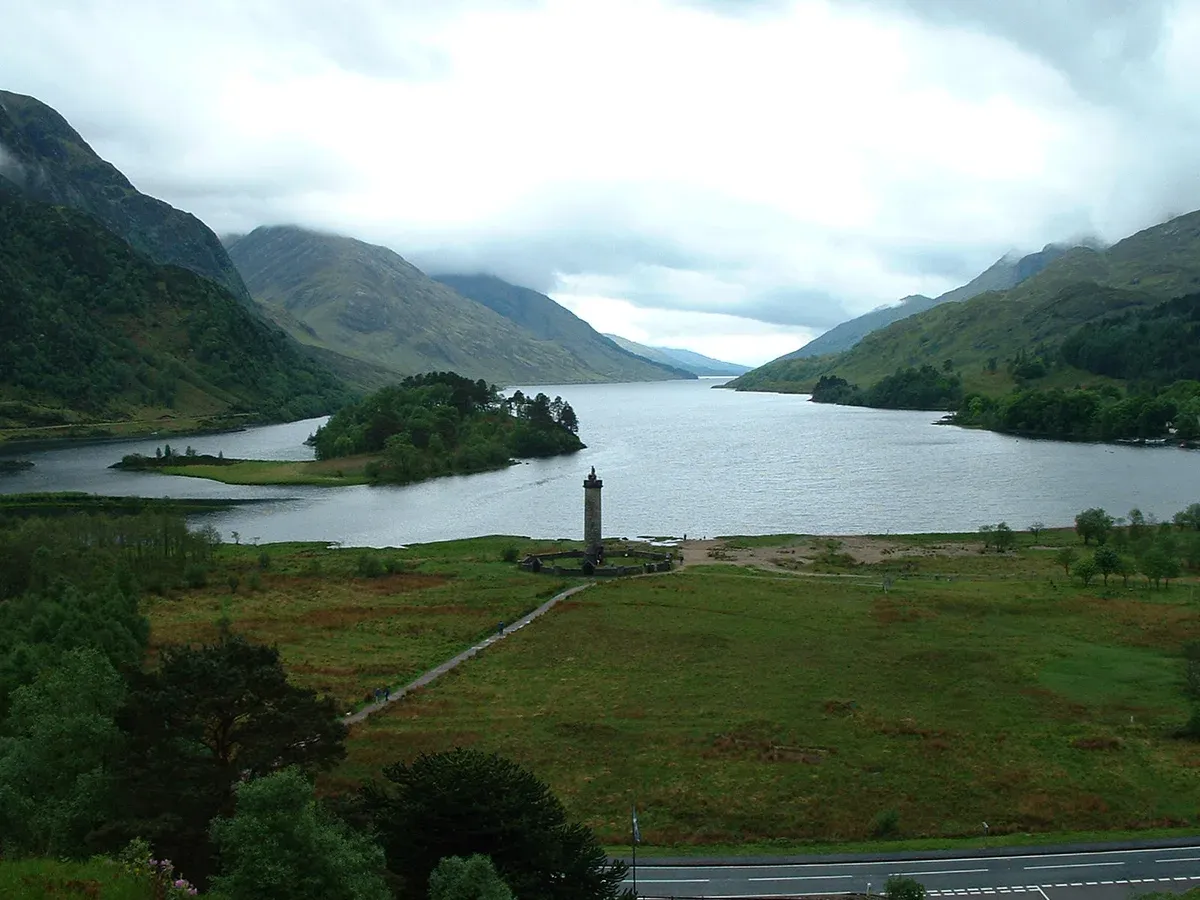
The Glenfinnan Monument at the head of Loch Shiel. Photo: Keith Evans, CC BY-SA 2.0, via Wikimedia Commons
Why Is the Steam Train Called the Jacobite?
The train is named after the historic Jacobite movement, and the name was adopted in 1995 when West Coast Railways took over the service. The route between Fort William and Mallaig passes the place where the 1745 rising began, so the name fits the line better than most railway branding does.
In 2026 the steam service crossed the viaduct westbound at roughly 10:45 to 11:10 and eastbound at roughly 15:00 to 15:20, as set out on the steam train times page, and the 2027 morning departures run 5 April to 29 October. An adult standard day return was £76 and a child's £43 in 2026, set out in the tickets guide. If the train is the reason you are here, the Jacobite steam train and Highlands tour from Inverness rides it as part of a guided day, and the guide to Glenfinnan viaduct tours lists every trip that stops here.
Are There Still Jacobites in Scotland?
Not as a political movement. The 1745 defeat ended Jacobitism as a serious cause, and the Stuart claim passed to Cardinal Henry, who styled himself Henry IX and was later given a stipend by George III. A brief revival ran through the late 1880s and the 1890s, when societies such as the Order of the White Rose, founded in 1886, appeared, and it faded around the First World War.
What remains is memory and heritage. The societies of that period are now represented by the Royal Stuart Society, and the story lives on in songs, in tartan and at places like Glenfinnan, where National Trust for Scotland looks after the monument. Historians now see Jacobitism as a strain of conservative politics running through British history rather than only a lost romantic cause.
Frequently Asked Questions
Where was the Jacobite standard raised?
Near Glenfinnan, on 19 August 1745. The Glenfinnan Monument at the head of Loch Shiel, erected in 1814, marks the area, and the best viewpoints guide explains how to reach it.
Are there still Jacobites in Scotland?
There is no Jacobite political movement today. The Royal Stuart Society represents the heritage societies of the late 19th century, and the history is kept alive at sites such as Glenfinnan.
Why did the Highlanders support Bonnie Prince Charlie?
Many tenants owed their landlords military service, and clan chiefs from the north-west brought most of the rank and file. Loyalty to the Stuarts and anger at the 1707 Union added to it.
Does the Jacobite steam train have anything to do with the Jacobites?
Yes. It is named after the Jacobite movement, a name adopted in 1995, and it crosses the glen where the 1745 rising began. A guided day from Inverness that includes the ride puts you on the train itself, and the Edinburgh Harry Potter steam train tour watches the crossing with the ride as an option.
How long was the gap between 1745 and the viaduct?
The standard was raised in 1745 and the viaduct was built in 1897 and 1898, so the gap is 152 years to the start of construction.
Were the Jacobites Catholic?
A few were, but by 1745 fewer than 1% of Scots were Catholic. Most Scottish Jacobites were Protestant Episcopalians.